Mobility Scooter License & Insurance: Navigating the Path to Freedom Safely and Legally
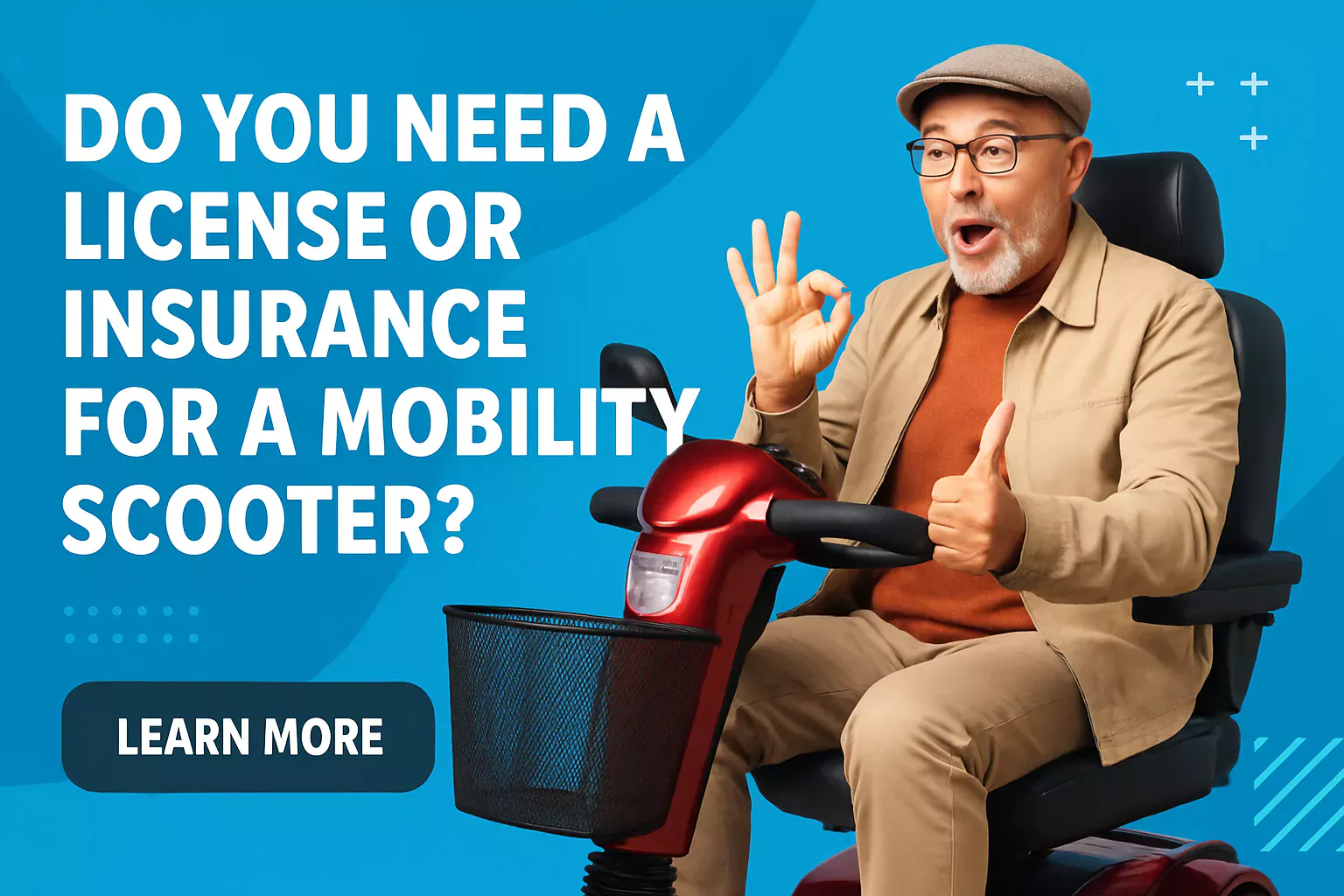
As an international expert deeply embedded in the world of electro-mobility and IoT, and having spent over two decades optimizing digital presence for leading companies, I understand the profound impact that personal mobility devices have on quality of life. At Electric Scooter 24, our mission is to empower individuals with the freedom to move, safely and independently. A question frequently arises, one that touches upon both liberation and responsibility: “Do you need a license or insurance for a mobility scooter?” This isn’t a simple yes or no; it’s a nuanced landscape shaped by laws, common sense, and a commitment to personal well-being.
This comprehensive guide will demystify the legal requirements, shed light on the crucial role of insurance, and provide indispensable road safety tips, ensuring your journey on a mobility scooter is always confident, compliant, and carefree. We’ll dive deep into mobility scooter laws and regulations across key regions, offering clarity on everything from speed limits to pavement rules. By the end, you’ll not only have the answers you need but also a renewed sense of empowerment, knowing you’re equipped to make informed decisions for your mobility and safety.
The Freedom to Move: Understanding Mobility Scooters
Before we delve into the legalities, let’s establish what we mean by a mobility scooter. These ingenious devices, like the advanced models offered by Electric Scooter 24, are modern, eco-friendly vehicles designed to provide comfort, safety, and independence. They are primarily used by individuals facing mobility challenges due to age, injury, or conditions such as arthritis, Parkinson’s disease, or chronic fatigue, enabling them to stay active and engaged with life. However, their versatility also makes them popular for everyday errands, leisurely trips, and even specialized uses like golf courses or off-road adventures.
Our range includes everything from 3-wheel scooters for maximum maneuverability to 4-wheel scooters for enhanced stability, foldable models for travel, heavy-duty options, and even those with cabins for all-weather comfort. Each is designed with certified premium safety as a cornerstone, meeting the highest global standards (CE, ISO 7176-XX, EN 12184, CPSC, UKCA, EMC, RoHS, LVD, FCC Part 15, UL, CSA/IC, RED, Machinery Directive). But with such capabilities, where do they fit into the existing framework of road safety and legal requirements?

Mobility Scooter License: The Global Landscape
One of the most common questions we hear is about the need for a mobility scooter license. The answer is nuanced and depends heavily on your geographical location and, in some cases, the specific classification of your mobility scooter.
General Principles: Why No License is Often Required
In many parts of the world, mobility scooters are generally classified as “powered wheelchairs” or “medical devices” rather than conventional motor vehicles. This distinction is key: if a device is primarily designed to aid mobility for someone with a disability, it typically falls outside the traditional licensing requirements for cars, motorcycles, or even e-bikes. This policy aims to ensure accessibility and remove barriers for individuals who rely on these devices for independent movement.
However, this exemption comes with responsibilities. Users are still expected to adhere to certain mobility scooter rules and road safety guidelines, ensuring the safety of themselves and others. The legal framework often differentiates between various classes of scooters, primarily based on their maximum speed and intended use (pavement vs. road).
Country-Specific Mobility Scooter Laws and Regulations
Let’s break down the legal requirements for mobility scooter license and disability scooter license across some major regions:
1. United Kingdom (UK) Mobility Scooter Laws
The UK has one of the clearest and most detailed sets of regulations for mobility scooters, classifying them into two main categories:
- Class 2 Mobility Scooters:
- Maximum Speed: 4 mph (6.4 km/h)
- Where to Use: Only on pavements (sidewalks) and pedestrian areas. They are NOT allowed on the road except to cross it or if the pavement is unavailable.
- License: No driving license is required.
- Insurance: Not legally required, but highly recommended (we’ll cover why in the next section).
- Road Tax: Exempt.
- Registration: Not required.
- Class 3 Mobility Scooters:
- Maximum Speed: 8 mph (12.8 km/h) on the road, automatically limited to 4 mph (6.4 km/h) when on pavements.
- Where to Use: Can be used on the road and on pavements.
- License: No driving license is required.
- Insurance: Not legally required, but highly recommended.
- Road Tax: Exempt.
- Registration: Must be registered with the DVLA (Driver and Vehicle Licensing Agency), but you don’t receive a registration document or number plate.
Key takeaway for UK users: While no license is needed, awareness of Class 2 vs. Class 3 and their respective speed and usage rules is paramount for mobility scooter safety and legal compliance. Products like our XL-308 Pro Electric Mobility Scooter for Seniors, with its top speed of 18 km/h (approx. 11 mph), would fall into a category that requires careful consideration of local regulations for use on public roads, even if it might be speed-limited for UK Class 3 compliance or primarily intended for private land use where no specific classification applies.
2. United States (USA) Mobility Scooter Laws
The situation in the USA is more complex as legal requirements for scooter use vary significantly by state, and sometimes even by city or county. Generally, most states classify mobility scooters as “medical devices” or “pedestrian aids.”
- License: In most states, no special license or disability scooter license is required to operate a mobility scooter. They are typically treated similarly to pedestrians.
- Insurance: Mobility scooter insurance is generally not legally mandated at the state level, but it is highly advisable.
- Speed Restrictions: While specific federal speed limits for mobility scooters are rare, many local ordinances may restrict their use on certain pathways or roads if they exceed a “reasonable” pedestrian speed (e.g., 4-6 mph).
- Usage: Mobility scooters are usually permitted on sidewalks, crosswalks, and in pedestrian areas. Some states may allow them on roads if sidewalks are unavailable, provided the user follows general driving laws and safety protocols.
Variations to be aware of:
- Some states might have specific rules regarding operation on roadways, requiring adherence to low-speed vehicle regulations for faster models.
- Certain jurisdictions might require lights or reflectors if operating at dusk or night.
- For example, in states like California, mobility scooters are generally considered “motorized wheelchairs” and are treated as pedestrians on sidewalks. They can operate on bike paths and roads with speed limits up to 25 mph, but only if no suitable pedestrian path exists.
Given this variability, it’s crucial for users in the U.S. to research their specific state and local driving laws. Websites like those of your state’s Department of Motor Vehicles (DMV) or Department of Transportation are excellent resources.

3. Canada Mobility Scooter Laws
Canada, similar to the U.S., has provincial and territorial variations in mobility scooter regulations.
- License: Generally, no driver’s license is required for mobility scooters across Canada, as they are often classified as “personal mobility aids” or “electric wheelchairs.”
- Insurance: Typically not mandatory, but highly recommended.
- Usage: Scooters are generally permitted on sidewalks, in malls, and in public buildings. When on roads, users are usually required to adhere to pedestrian rules, stick to the shoulder, or use bike lanes where available.
- Speed: Provinces may have informal or formal guidelines regarding speed, often around 10 km/h (approx. 6 mph) on sidewalks. Faster models might be subject to different rules.
Key Provincial Notes:
- Ontario: Mobility scooters are defined as “motorized wheelchairs” and are treated as pedestrians. No license, registration, or insurance needed.
- British Columbia: Similar classification as “motorized personal mobility devices.” No license required.
- Alberta: Considered “personal mobility devices” with no license or registration required.
Always verify with your specific provincial Ministry of Transportation for precise scooter requirements and driving laws.
4. Australia Mobility Scooter Laws
Australia’s regulations are determined by individual states and territories, but there’s a common thread:
- License: No driver’s license is required for mobility scooters in any Australian state or territory. They are generally considered “motorized wheelchairs” or “personal mobility devices.”
- Insurance: Not legally compulsory, but highly recommended for liability and property protection.
- Speed: A common restriction is a maximum speed of 10 km/h (approx. 6 mph). If a scooter can exceed this, it might be classified differently and subject to stricter road rules or even require registration as a vehicle.
- Usage: Primarily for footpaths (sidewalks) and shared paths. Users are treated as pedestrians. When no footpath is available, they may use the road shoulder or the road itself, following road rules and staying as far left as possible.
For example, in New South Wales, motorized wheelchairs (mobility scooters) must not travel faster than 10 km/h. They are permitted on roads where there is no footpath, and the road speed limit is 50 km/h or less, or if the road is a shared zone.
5. European Union (EU) Mobility Scooter Laws
Within the EU, there is no single, unified law governing mobility scooters. Regulations vary significantly from one member state to another. However, general principles often apply:
- License: Most EU countries do not require a specific driving license for mobility scooters, especially for models intended for pedestrian areas or with limited speeds. They are often categorized as assistive devices for disabled individuals.
- Insurance: While not universally mandatory, some countries, like Germany, might require liability insurance for certain types of mobility scooters (often faster or more powerful models). Even where not required, it is strongly advised.
- Speed & Usage: Speed limits are common, typically ranging from 6 km/h to 15 km/h (approx. 3.7 to 9.3 mph) depending on whether the scooter is used on pavements or roads. Many countries differentiate between models used solely on pavements and those allowed on roads.
Examples:
- Germany: Scooters with speeds up to 6 km/h don’t need insurance or a license. Faster models (up to 15 km/h or 20 km/h) might require a specific insurance plate (similar to a moped) and the rider to be at least 15 years old.
- Netherlands: Mobility scooters (gehandicaptenvoertuig) generally do not require a driving license, but can be driven on bike paths and roads. Speed limits apply.
- France: Treated as “pedestrian aids” up to certain speeds, usually requiring no license or insurance.
It is vital for residents or visitors to any EU country to check the specific national and local regulations regarding mobility scooter rules and legal requirements, as these can impact the usability of models like our XL-309 3 Wheel Electric Mobility Scooter, which boasts a 20 km/h top speed, making it exceptionally efficient but potentially subject to varied regulations in different territories.
Summary Table: Key Mobility Scooter Legal Requirements (General)
| Region | License Required? | Insurance Required? | General Speed Limit (Pavement/Road) | Primary Usage Areas |
|---|---|---|---|---|
| United Kingdom | No (Class 2/3) | No (Highly Recommended) | 4 mph (Pavement), 8 mph (Road – Class 3) | Pavements, Roads (Class 3) |
| United States | No (Generally) | No (Highly Recommended) | Varies by State/Local; often pedestrian speed (4-6 mph) | Sidewalks, Crosswalks, Pedestrian Areas (Roads, if no sidewalks) |
| Canada | No (Generally) | No (Highly Recommended) | Varies by Province; often 10 km/h (Pavement) | Sidewalks, Malls, Public Buildings (Road shoulder/bike lanes) |
| Australia | No | No (Highly Recommended) | 10 km/h (Footpath) | Footpaths, Shared Paths (Roads, if no footpath) |
| European Union | No (Generally, with exceptions for faster models) | No (Varies by country, often recommended) | Varies by Country; 6-15 km/h (Pavement/Road) | Varies by Country; Pavements, Roads (depending on class) |
Disclaimer: This table provides a general overview. Laws are subject to change and vary by specific jurisdiction. Always consult official government sources for the most current and detailed information.
Mobility Scooter Insurance: A Prudent Investment for Peace of Mind
While a mobility scooter license is rarely required, the question of mobility scooter insurance is equally, if not more, critical. Even when not legally mandated, having adequate insurance is a cornerstone of responsible ownership and provides invaluable protection against unforeseen circumstances.
Why Insurance is Highly Recommended (Even If Not Required)
Consider the potential scenarios where insurance becomes a lifesaver, transforming anxiety into assurance:
- Personal Injury and Medical Costs: Accidents can happen. If you’re involved in a collision and sustain injuries, medical bills can quickly escalate. Mobility scooter insurance can cover your medical expenses.
- Public Liability: This is arguably the most important aspect. What if you accidentally cause damage to someone else’s property or, worse, injure a pedestrian while operating your scooter? Without public liability insurance, you could be held personally responsible for significant compensation claims, potentially leading to financial ruin. This coverage protects you from these catastrophic costs.
- Theft Protection: Mobility scooters are valuable assets. Unfortunately, like any other vehicle, they can be stolen. Insurance can cover the cost of replacing your scooter, allowing you to regain your independence without a major financial setback.
- Accidental Damage: You might accidentally damage your own scooter. Whether it’s a fall, a bump, or a manufacturing defect that surfaces outside of warranty, insurance can cover repair or replacement costs.
- Breakdown and Roadside Assistance: Some policies offer breakdown cover, which means if your scooter malfunctions away from home, you can get assistance, potentially including transportation for you and your scooter. Imagine being stranded with a flat battery or a mechanical issue – this service is priceless.
- Travel Coverage: If you plan to travel with your mobility scooter (especially auto-folding models like the XL-220 Pro designed for this purpose), specialized travel insurance or an extension to your mobility scooter policy can provide coverage abroad.
At Electric Scooter 24, we believe that true freedom comes with security. Our commitment to certified premium safety and comprehensive warranty is a testament to our focus on your peace of mind. Extending that peace of mind with a suitable mobility scooter insurance policy is a logical next step for every owner.
Types of Mobility Scooter Insurance Coverage
When considering disability scooter insurance, look for policies that offer:
- Third-Party Liability: Covers damage or injury you cause to others or their property. Absolutely essential.
- Theft and Vandalism: Protects against the loss of your scooter due to criminal acts.
- Accidental Damage: Covers repairs or replacement if your scooter is damaged in an accident.
- Personal Accident Cover: Provides a payout if you suffer serious injury or death while using your scooter.
- Breakdown Assistance: Ensures help if your scooter breaks down while you’re out.
Many home insurance policies might offer limited coverage for mobility scooters, but often this is only for theft or damage while at home. They typically do not cover third-party liability outside the home. Always check the fine print of your existing policies and consider a dedicated mobility scooter insurance plan for comprehensive protection.

Road Safety and Responsible Usage: Beyond Legalities
Whether a license or insurance is mandatory, adhering to stringent road safety guidelines is always essential. A mobility scooter is a vehicle, and responsible operation is paramount for your safety and the safety of pedestrians and other road users. This section focuses on universal best practices, regardless of local mobility scooter laws.
Essential Mobility Scooter Safety Tips
- Know Your Scooter: Understand its controls, turning radius, braking system (like the E-Brake on our XL-308 Electric Mobility Scooter), and battery range (e.g., the XL-220 Pro offers up to 40 km, significantly reducing range anxiety). Practice in a safe, open area before venturing into public spaces.
- Follow Pedestrian Rules (Mostly): When on pavements, remember you are effectively a pedestrian. Give way to walkers, maintain a safe distance, and be mindful of your speed. Don’t block pathways.
- Be Visible: Use lights (front and rear), reflectors, and consider wearing high-visibility clothing, especially at dawn, dusk, or night. Many of our scooters, like the XL-308, feature integrated lighting for enhanced visibility.
- Use Crossings Safely: Always use designated crossings (pedestrian crossings, zebra crossings). Look both ways multiple times, make eye contact with drivers, and proceed only when it’s safe.
- Manage Speed Appropriately: While models like the XL-309 can reach 20 km/h, always adjust your speed to conditions. On crowded pavements, slow down. When encountering children or animals, reduce speed significantly.
- Avoid Distractions: Do not use mobile phones or wear headphones that impair your hearing. Stay alert to your surroundings.
- Weather Awareness: Be cautious in adverse weather. Rain, snow, or ice can affect traction and braking. Consider a scooter with a cabin for protection, or avoid riding in severe conditions.
- Secure Your Load: If carrying shopping or bags, ensure they are securely stored and do not obstruct your view or balance. Using baskets or secure compartments is ideal.
- Regular Maintenance: Keep your scooter in good working order. Check tires, brakes, and battery regularly. Electric Scooter 24 offers comprehensive warranty & service centers across Europe and the USA, ensuring your scooter remains in top condition.
- Stay Sober: Never operate a mobility scooter under the influence of alcohol or drugs. It’s unsafe and can lead to legal penalties, even if a driving license isn’t required.
Navigating Roads vs. Pavements (Sidewalks)
The decision to use a mobility scooter on the road or pavement is often dictated by local regulations and common sense. Even where road use is permitted for faster models, it’s generally safer to use pavements if available, maintaining a safe pedestrian speed.
- On Pavements:
- Maintain a speed that is safe for pedestrians (typically walking pace or up to 4-6 mph).
- Be prepared to stop or slow down suddenly.
- Give pedestrians right of way.
- On Roads (where permitted):
- Follow all standard road rules, including traffic signals, stop signs, and lane discipline.
- Ride on the left-hand side (in countries with left-hand traffic) or right-hand side (in countries with right-hand traffic) of the road, as close to the curb as safely possible.
- Use appropriate signals for turning.
- Be aware of vehicle blind spots, especially large trucks and buses.
- Consider a scooter with better road-worthiness features, such as robust tires (e.g., 10″ tubeless tires on XL-310), enhanced lighting, and a higher top speed where legally permitted.

Choosing the Right Mobility Scooter: Informed Decisions with Electric Scooter 24
Understanding license and insurance requirements, alongside safety protocols, brings us to the core of your mobility journey: selecting the right scooter. At Electric Scooter 24, we specialize exclusively in premium electric mobility scooters, offering a solution for every need and ensuring you have the best possible experience.
Factors to Consider Beyond Legal Requirements
- Your Specific Mobility Needs:
- Long-term vs. Temporary: Are you seeking long-term independence, or is it for rehabilitation (e.g., after surgery)?
- Physical Condition: Do you need extra stability (4-wheel like XL-211X) or maximum maneuverability (3-wheel like XL-309, XL-310)? Consider weight capacity (up to 200 kg for XL-309/XL-310), ease of control, and seat comfort (leather seats on XL-220 Pro, XL-308 Pro, XL-309, XL-310).
- Battery Range: How far do you need to travel daily? Ranges vary from 15 km (XL-220, XL-308, XL-310) to an impressive 40 km (XL-220 Pro). A longer range means more freedom and less range anxiety.
- Intended Use Environment:
- Urban/Pavement: Compact, maneuverable scooters are ideal for city streets and shopping.
- Outdoors/Uneven Terrain: Consider models with robust tires (like the 10″ solid tires on XL-308 Pro or 10″ tubeless on XL-310) or off-road capabilities.
- Travel: Auto-folding scooters like the XL-220 Pro are a game-changer for air, train, or car travel, offering unparalleled portability.
- Portability and Storage:
- Do you need to transport your scooter frequently? Foldable mobility scooters are incredibly convenient for car trunks or public transport. The XL-220 Pro, for instance, auto-folds with a button press.
- Consider storage space at home.
- Safety Features:
- Braking System: E-brakes (XL-211X, XL-220, XL-220 Pro, XL-308, XL-308 Pro) or front/rear drum brakes (XL-309, XL-310) are crucial.
- Stability: 3-wheel vs. 4-wheel, solid tires for stability.
- Visibility: Reflectors, lights.
- Certifications: All Electric Scooter 24 models are certified to global standards (CE, ISO, UL, etc.), guaranteeing safety you can trust.
- Budget and Value:
- Prices vary, but quality and features are key. Electric Scooter 24 offers competitive pricing (from €345 for XL-309) with discounts up to 50% on selected models, ensuring quality transport is affordable.
- Factor in long-term benefits like durability, warranty, and available service centers.
- Manufacturer Support:
- A comprehensive warranty and a network of authorized service centers (like Electric Scooter 24’s across Europe and the USA) provide peace of mind for years to come.
- Reliable customer support for any questions or issues.
Why Electric Scooter 24 Is Your Trusted Partner
Our commitment goes beyond selling scooters. It’s about empowering your life. When you choose Electric Scooter 24, you gain a partner dedicated to your mobility and peace of mind:
- Certified Premium Safety: Every scooter meets stringent global safety standards. Your well-being is our top priority.
- Comprehensive Warranty & Service: A full warranty and a robust network of authorized service centers mean you’re always supported.
- Worldwide Delivery: Free delivery to 29 countries, and the best rates for others, with full tracking. We bring freedom to your doorstep.
- Best Conditions: Unbeatable value, transparent pricing, and a hassle-free 14-day return policy.
- Expertise You Can Trust: Our exclusive focus on electric mobility scooters ensures we offer only the best, verified solutions.
Whether you’re exploring the highly portable XL-220 Pro with its 40 km range and auto-folding convenience, or the robust XL-308 Pro designed for seniors and rehabilitation with a powerful 350W motor, you are investing in a product that is not just a mode of transport, but a lifestyle enhancement. We aim to offer the best electric scooter for seniors, disabled adults, and anyone seeking greater independence.

Expert Insights and Frequently Asked Questions (FAQ)
As a professor specializing in electro-mobility and IoT, I frequently engage with questions from prospective and current mobility scooter users. Here are some of the most common and critical inquiries, answered to provide clarity and empower your choices.
Q1: Can I drive my mobility scooter on the road?
A: This largely depends on your specific region’s mobility scooter laws and the classification of your scooter. In the UK, only Class 3 scooters (up to 8 mph) can be driven on the road. In many parts of the US, Canada, and Australia, slower scooters are typically restricted to sidewalks, while faster ones might be allowed on roads if no suitable pedestrian path exists, often with speed restrictions and requiring adherence to road rules. Always verify your local driving laws. For example, our XL-309 and XL-310 models, with top speeds of 20 km/h (approx. 12.4 mph), are designed for versatility, but their road use must align with local scooter requirements.
Q2: Do I need a driving test to operate a mobility scooter?
A: No. In the vast majority of jurisdictions worldwide, including the UK, USA, Canada, Australia, and most EU countries, a driving test is NOT required for mobility scooters. They are generally considered assistive devices rather than traditional vehicles. However, it’s highly recommended to thoroughly familiarize yourself with the controls and practice safe operation in a quiet, open area before using your scooter in public spaces.
Q3: What happens if I have an accident on my mobility scooter without insurance?
A: If you are involved in an accident and cause injury to another person or damage to their property, you could be held personally liable for all associated costs. This could include medical expenses, property repair bills, and legal fees, potentially leading to significant financial hardship. Even if mobility scooter insurance isn’t legally required, it is a critical safeguard for public liability and financial protection. It’s an investment in your peace of mind.
Q4: Are there age restrictions for using a mobility scooter?
A: In many countries, there are no specific minimum age restrictions for using a mobility scooter, especially for models classified as medical devices. However, some regions, particularly in the UK for Class 3 scooters, might have a minimum age (e.g., 14 years old). Even where no formal age limit exists, responsible use implies a certain level of maturity, judgment, and physical capability to safely control the device. For instance, our XL-211X is explicitly designed for seniors, highlighting the target demographic.
Q5: Can I take my mobility scooter on public transport or an airplane?
A: This varies. Many public transport systems (buses, trains, trams) are increasingly accommodating mobility scooters, but often have size and weight restrictions. Always check with the specific transport provider beforehand. For air travel, it’s generally possible, especially with auto-folding models like the XL-220 Pro, but there are strict rules regarding battery type and capacity. You *must* inform your airline in advance and confirm their specific regulations, especially concerning Lithium-ion batteries (e.g., the 24V 20Ah battery of the XL-220 Pro). Our scooters come with CE certification, which is often a prerequisite for air travel acceptance.
Q6: How do I choose between a 3-wheel and 4-wheel mobility scooter?
A: The choice depends on your priorities.
- 3-Wheel Scooters (e.g., XL-309, XL-310): Offer greater maneuverability, making them excellent for indoor use, tight spaces, and navigating crowded areas. They generally have a tighter turning radius.
- 4-Wheel Scooters (e.g., XL-211X, XL-220, XL-220 Pro): Provide superior stability and a larger footprint, making them more suitable for outdoor use, uneven terrain, and longer distances. They offer a more secure and comfortable ride, especially for users who require more support.
Your personal balance, intended use, and comfort preferences should guide your decision. At Electric Scooter 24, we offer both to ensure you find the perfect fit.
Q7: What is the average lifespan of a mobility scooter battery?
A: The lifespan of a mobility scooter battery typically ranges from 18 months to 3 years, depending on the type (e.g., sealed lead-acid, gel, lithium-ion), usage patterns, and how well it’s maintained. Regular charging, avoiding deep discharges, and storing the scooter in a temperate environment can significantly extend battery life. Our models feature robust batteries like the 24V 20Ah in the XL-220 Pro, designed for reliability and longevity.

The Future of Mobility: Smart Choices for an Independent Life
As a leading voice in electro-mobility and IoT, I can confidently state that the future of personal transportation is electric, smart, and designed for enhanced independence. Mobility scooters are at the forefront of this evolution, offering not just a means of getting around, but a gateway to a more active, connected, and fulfilling life. The key to unlocking this potential lies in making informed decisions about legal requirements, proactively protecting yourself with insurance, and embracing responsible safety practices.
We’ve explored the complex tapestry of mobility scooter license and insurance requirements across various regions. We’ve seen that while a specific driving license is rarely necessary, understanding the mobility scooter laws, scooter rules, and scooter requirements specific to your location is crucial. More importantly, we’ve highlighted why mobility scooter insurance, particularly public liability and personal injury coverage, is an indispensable investment, offering protection and peace of mind that no legal loophole can provide.
At Electric Scooter 24, we are more than just a provider of premium electric mobility scooters. We are your partner in navigating this exciting landscape. Our commitment to certified safety, robust warranties, and comprehensive service ensures that when you choose one of our scooters – be it the compact and nimble XL-211X, the auto-folding marvel XL-220 Pro, or the powerful and stylish XL-308 Pro – you’re not just buying a product. You’re investing in a superior mobility experience backed by unparalleled support and global quality standards.
Every Electric Scooter 24 model, from the versatile 3-wheel XL-309 to the high-performance XL-310, is engineered to transform daily challenges into opportunities for exploration and connection. We understand the intrinsic human desire for freedom – the joy of running errands independently, visiting loved ones without hassle, or simply enjoying the outdoors. Our scooters are designed to amplify that freedom, making it comfortable, safe, and accessible to all.
Take the Next Step Towards Unrivaled Freedom and Safety
Don’t let uncertainty about legal requirements or insurance hold you back from experiencing the profound benefits of enhanced mobility. The path to an independent, active lifestyle is clearer than you think.
We invite you to explore our extensive range of certified premium electric mobility scooters at Electric Scooter 24. Discover the model that perfectly aligns with your needs, your lifestyle, and your desire for uncompromised freedom. With our best conditions, worldwide delivery, and dedicated support, your journey towards greater independence is just a click away.
Choose independence. Choose safety. Choose Electric Scooter 24.
Explore Our Mobility Scooters Today!
An Expert’s Final Thoughts on Navigating Mobility Scooter Ownership
In my 27 years bridging the worlds of advanced engineering and strategic digital solutions, I’ve seen countless technologies emerge that promise to enhance human lives. Mobility scooters are not just a promise; they are a tangible reality, offering dignity and autonomy to millions. However, like any powerful tool, responsible usage is key. The confusion around “mobility scooter license” and “mobility scooter insurance” is perfectly natural, given the varied global regulations. My core advice, transcending borders, is this:
- Prioritize Knowledge: Be an informed user. Understand the specific disability scooter laws and scooter requirements in your local area. This empowers you, prevents legal issues, and ensures seamless integration into your community’s traffic and pedestrian flow.
- Embrace Proactive Protection: Do not view insurance as an optional extra, but as an essential component of ownership. While a scooter license may not be mandatory, the peace of mind offered by comprehensive mobility scooter insurance, especially for public liability, is invaluable. Accidents are unplanned, and their financial repercussions can be devastating.
- Champion Safety: Your mobility scooter is an extension of your independence. Operate it with the same care and attention you would any other vehicle. Adhere to road safety guidelines, maintain visibility, and always be aware of your surroundings. Our commitment to certified premium safety is why Electric Scooter 24 is a leader, but the final responsibility for safe operation rests with you.
The growth in demand for mobility scooters reflects a global shift towards inclusive and accessible living. As a Top-10 SEO specialist, I see this reflected in search trends – people are actively seeking knowledge about mobility scooter laws, mobility scooter regulations, and road safety. By providing clear, expert-driven information, we aim not only to rank high in search engines but to genuinely serve the community, fostering confidence and smart choices.
The joy of unimpeded movement is a fundamental human right. Electric mobility scooters provide this. By understanding the rules of the road and embracing sensible precautions, you ensure that this freedom remains boundless and without worry. Your journey of independence truly begins with knowledge and responsibility.