Mobility Scooter vs. Wheelchair: Choosing What’s Right for Your Needs
As a global engineering expert with 27 years in electro-mobility and IoT, and a professor at Harvard, I’ve seen firsthand how advancements in assistive technology are transforming lives. The choice between a mobility scooter and a wheelchair is more than just selecting a device; it’s about redefining your independence, comfort, and ability to engage with the world. This decision is deeply personal, impacting your daily routines, travel capabilities, and overall quality of life. My purpose here, drawing on decades of experience and the latest research, is to provide you with the most comprehensive, unbiased, and actionable insights to navigate this crucial choice. We’ll cut through the jargon, analyze the nuances, and empower you to make an informed decision that truly aligns with your unique needs and aspirations.
The journey to finding the ideal mobility solution often begins with a fundamental question: Should I choose a mobility scooter or a wheelchair? It’s a question of functionality, lifestyle, and how you envision your future mobility. This in-depth guide will explore every facet of both mobility scooters and wheelchairs, from their core mechanics to their real-world implications, ensuring you feel confident and enlightened in your decision.
The Core Dilemma: Mobility Scooter or Wheelchair?
The search for enhanced mobility is a deeply personal quest. For many, it signifies regaining lost independence, reconnecting with loved ones, and rediscovering the joy of movement. The market offers two primary categories of assistive devices designed to empower individuals facing mobility challenges: mobility scooters and wheelchairs. While both serve the fundamental purpose of aiding movement, their design, operation, and suitability vary significantly.
The initial thought might be, “They both help me move, so what’s the big difference?” The difference, my friend, is profound. It lies in the user’s physical capabilities, the environment they navigate, their lifestyle aspirations, and even the psychological impact of the device. Choosing correctly can unlock a world of freedom; choosing incorrectly can lead to frustration and hinder progress. As a leading SEO specialist, I understand that clarity and comprehensive analysis are key to delivering true value, and that’s precisely what we’ll provide.

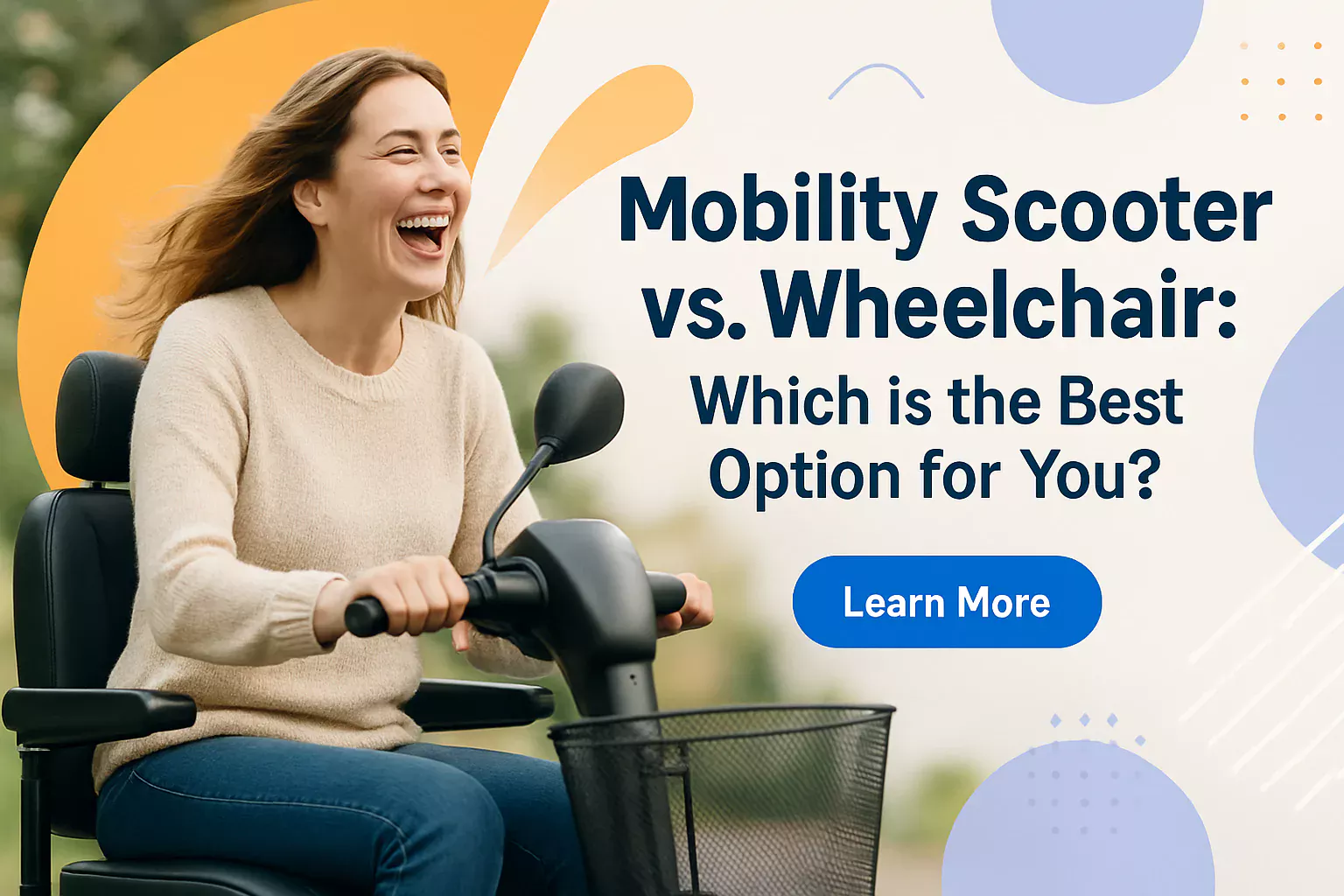
Embracing outdoor freedom with an advanced mobility scooter.
Understanding Mobility Scooters: Your Path to Enhanced Independence
A mobility scooter is an electric-powered mobility aid resembling a motor scooter. It typically features a seat, handlebars or a tiller for steering, a floorboard for the feet, and an electric motor powered by rechargeable batteries. Scooters are designed for users who can walk short distances, stand, and transfer themselves to and from the seat, but require assistance for longer distances or to conserve energy. They offer a sense of active participation and often come with features that make them ideal for outdoor use and extended travel.
Pros of Mobility Scooters:
- Increased Independence and Freedom: Scooters allow users to cover significant distances without physical exertion, fostering a profound sense of independence. This means effortless trips to the grocery store, visits to friends, or leisurely outings in the park.
- Speed and Range: Generally faster and with a longer range than most power wheelchairs, mobility scooters like the XL-308 Pro with its 35 km range, or the XL-220 Pro offering an impressive 40 km, are perfect for individuals who need to travel further or keep up with companions.
- Comfort: Most scooters feature padded seats, armrests, and adjustable components for a comfortable ride, even on longer journeys. Models like the XL-308 Pro boast plush leather seats, enhancing the user experience.
- Social Perception: Many users feel that scooters carry less of a “disability” stigma compared to wheelchairs. Their resemblance to recreational vehicles can make them feel more empowering and less like a medical necessity, contributing positively to social confidence.
- Outdoor and Varied Terrain Capability: With larger wheels and greater ground clearance, many scooters, especially 4-wheel models or heavy-duty versions, handle outdoor terrains, uneven sidewalks, and gentle inclines more effectively than most wheelchairs. Our XL-211X, for instance, offers robust solid tires for a smooth ride on city streets.
- Storage and Portability: Many modern folding mobility scooters, such as the XL-220 Pro, offer auto-folding technology, making them incredibly convenient for transport in car trunks or for air travel (with CE-certified batteries). This ease of portability is a game-changer for travel enthusiasts.
- Stylish Designs: Scooters are increasingly designed with aesthetics in mind, offering vibrant colors and sleek profiles that appeal to a wide range of users who prioritize both function and style. The XL-308 and XL-308 Pro with their motorcycle-inspired designs exemplify this trend.
Cons of Mobility Scooters:
- Maneuverability in Tight Spaces: Due to their wider turning radius, scooters can be challenging to maneuver in confined indoor spaces like narrow hallways, small shops, or crowded rooms.
- Upper Body Strength Required: While they are electric, operating the tiller and maintaining balance, particularly with 3-wheel models, can still require some upper body strength and core stability, albeit less than a manual wheelchair.
- Weight and Transport: Even “lightweight” models might still be too heavy for some individuals to lift without assistance, especially if they are not auto-folding.
- Cost: High-quality electric scooters can represent a significant investment, though Electric Scooter 24 is committed to making quality transport affordable with competitive pricing and discounts.
Ideal User Profiles for Mobility Scooters:
- Seniors and Elderly Users: Especially those experiencing mild to moderate mobility decline due to conditions like arthritis or general weakness, but still possess sufficient upper body strength and balance for confident steering. The XL-211X is a perfect choice for seniors seeking easy control and portability.
- Individuals with Chronic Fatigue or Limited Endurance: Conditions like chronic fatigue syndrome, mild heart conditions, or recovering from surgery where conserving energy is paramount. The XL-220 Pro, with its extended range, allows users to stay active without overexertion.
- Outdoor Enthusiasts and Travelers: Those who frequently navigate outdoor environments, travel, or require a device that can be easily transported. The auto-folding XL-220 and XL-220 Pro are specifically designed for travel and leisure enthusiasts.
- Active Adults Seeking Independence: Individuals who want to maintain an active lifestyle, participate in social events, and value the perception of a recreational vehicle over a medical device.

The ultimate in portability: a foldable mobility scooter easily fitting into a car.
Electric Scooter 24’s Scooter Range Highlights:
Our exclusive focus on electric mobility scooters allows us to offer meticulously curated solutions.
-
XL-211X (4 Wheels Lightweight Portable Electric Mobility Scooter for Seniors with Easy Control):
A compact and reliable 4-wheel scooter ideal for daily commutes and short trips. With a 250W motor and an 18 km range, it’s a perfect entry-level option for seniors valuing safety and ease of use. Crafted from durable aluminum alloy, it supports up to 100 kg. Its solid 8″ tires and E-brakes ensure a smooth, secure ride. Price: €780.00.

-
XL-220 (High-Quality Auto Folding Electric Mobility Scooter for Seniors & Disabled):
This auto-folding marvel offers unparalleled convenience for travel. Its 250W motor provides a smooth 8 km/h ride and a 15 km range. Weighing just 32 kg and featuring one-button auto-folding via remote control, it’s perfect for those who need portability. Certified with CE standards, it ensures safety and reliability. Price: €975.00.
-
XL-220 Pro (High-Quality Auto Folding Electric Mobility Scooter for Seniors, Disabled Adults, and Travel):
The upgraded version of the XL-220, boasting an impressive 40 km range with a 24V 20Ah battery. All the auto-folding convenience and safety features of the XL-220, but with extended endurance for longer journeys. This is truly the best folding electric scooter for those who refuse to be limited by distance. Price: €1150.00.
-
XL-308 (Electric Mobility Scooter for Adults – High-Performance Mobility Solution):
A stylish 3-wheel scooter with a motorcycle-inspired design, perfect for urban adventurers. Its 350W motor delivers speeds up to 18 km/h and a 15 km range. Comfortable leather seats and robust solid tires ensure a smooth ride. Ideal for rehabilitation and daily commutes, blending aesthetics with performance. Price: €637.50.
-
XL-308 Pro (High-Quality Electric Mobility Scooter for Seniors):
The upgraded XL-308 model, offering a remarkable 35 km range with a 36V 15Ah battery. It maintains the powerful 350W motor and stylish design, making it the best mobility scooter for seniors who desire extended freedom and performance without compromising on comfort or aesthetics. Price: €720.00.
-
XL-309 (3 Wheel Electric Mobility Scooter for Adults | Best Scooter for Seniors):
An affordable yet powerful 3-wheel scooter designed for adults. It features a 350W motor, a top speed of 20 km/h, and a 25-30 km range with a 48V 12Ah battery. Supporting up to 200 kg and equipped with drum brakes and 10″ tubeless tires, it offers unmatched stability and comfort. A fantastic value for reliable mobility. Price: €345.00.
-
XL-310 (High-Quality 3 Wheel Electric Mobility Scooter for Adults):
Similar to the XL-309, this 3-wheel scooter offers a powerful 350W motor, 20 km/h speed, and 25-30 km range. It’s a robust choice for adults needing stability and high weight capacity (up to 200 kg), featuring leather seats and a folding design. Ideal for those who need a dependable, stylish, and comfortable ride for daily activities. Price: €420.00.


Understanding Wheelchairs: Essential Mobility Assistance
A wheelchair is a chair with wheels, designed to be propelled by the user (manual) or by an electric motor (power). Wheelchairs are typically chosen when a user has significant limitations in walking, standing, or maintaining balance, and may require full-time seating support. They come in various configurations, each catering to different levels of physical ability and environmental demands.
Pros of Wheelchairs:
- Superior Maneuverability: Generally more agile than scooters, especially manual wheelchairs and compact power wheelchairs, making them excellent for navigating tight indoor spaces, around furniture, and through narrow doorways.
- Lower Energy Requirement (Power Wheelchairs): Power wheelchairs require minimal physical effort from the user, making them suitable for individuals with very limited upper body strength or severe fatigue.
- Stability: Many power wheelchairs offer exceptional stability, particularly those with six or eight wheels, providing a very secure ride.
- Support and Posture: Wheelchairs often provide more customizable seating and positioning options, crucial for users who spend long periods in the device and require extensive postural support.
- Indoor Use Focus: Historically, wheelchairs have been the go-to for indoor mobility, though modern scooters are challenging this.
- Direct Patient Care: Often preferred in medical facilities for easy patient transfer and specific rehabilitation needs.

Simple, intuitive controls for seamless operation.
Cons of Wheelchairs:
- Limited Speed and Range: While power wheelchairs offer an electric advantage, their top speeds and range are generally less than mobility scooters, limiting their effectiveness for long-distance outdoor travel.
- Portability Challenges: Many power wheelchairs are heavy and bulky, making them difficult to transport in standard vehicles. Even manual wheelchairs can be cumbersome to disassemble and lift.
- Requires Assistance (Manual Wheelchairs): Manual wheelchairs heavily rely on the user’s upper body strength and endurance, or on a caregiver for propulsion, which can limit independence.
- Social Perception: Unfortunately, wheelchairs can sometimes be perceived more distinctly as a “medical device,” which some users may find affects their self-image or social confidence.
- Outdoor Terrain Limitations: Standard wheelchairs, especially manual ones, struggle on uneven surfaces, rough terrain, or significant inclines.
Ideal User Profiles for Wheelchairs:
- Individuals with Significant Physical Limitations: Those who cannot walk or stand for even short periods, or who lack the upper body strength and balance required for a scooter. This includes individuals with severe neurological conditions or extensive post-surgical recovery.
- Users Needing Full-Time Seating Support: For individuals who require constant postural support due to various disabilities or chronic conditions.
- Indoor-Focused Mobility: Those whose primary need is to navigate their home, medical facilities, or indoor public spaces where tight turns and compact footprints are essential.
- Patients in Rehabilitation: Often used in clinical settings for specific therapeutic purposes or for short-term assistance during recovery.
The Definitive Comparison: Mobility Scooter vs. Wheelchair
To make the most informed decision, let’s break down the key differences using a comparative approach. This table provides a quick reference for the critical factors to consider.
| Feature | Mobility Scooter | Manual Wheelchair | Power Wheelchair |
|---|---|---|---|
| User’s Physical Capability | Can stand, walk short distances, moderate upper body strength for steering. Ideal for energy conservation. | Requires significant upper body strength for self-propulsion OR assistance from caregiver. | Minimal physical effort needed. Operated via joystick/controls. Suitable for severe limitations. |
| Speed & Range | Generally faster (up to 20 km/h) and longer range (up to 40 km with XL-220 Pro) for outdoor travel. | Varies greatly by user’s endurance. No electric range. | Slower (typically 6-10 km/h) and shorter range than scooters, focused on indoor/short outdoor use. |
| Maneuverability | Wider turning radius, better for open spaces. Less agile in very tight indoor areas. | Excellent in tight spaces due to compact size and ability to pivot. | Very good in tight spaces, can turn in place. Slightly larger footprint than manual. |
| Portability | Many models are foldable (auto-folding XL-220/Pro) and disassemble for transport, varying in weight (e.g., XL-220 at 32kg). | Foldable and lighter, easier for car transport, but requires manual handling. | Often heavy and bulky, difficult to transport without specialized vehicle lifts. Some lighter models exist. |
| Comfort (Seating) | Comfortable padded seats, good for moderate periods of sitting. Less customizability for complex postural needs. | Basic seating, often requires added cushions for comfort and pressure relief. | Highly customizable seating systems, excellent for long-term sitting and complex postural support. |
| Terrain Capability | Better for varied outdoor terrain (grass, uneven sidewalks, inclines) with larger wheels and ground clearance. | Best on flat, smooth surfaces. Struggles on rough terrain or inclines. | Good for indoor and some outdoor use, but often limited on very rough or steep terrain compared to scooters. |
| Cost Range | Starts from €345 for basic models (XL-309) up to €1150 for premium auto-folding with extended range (XL-220 Pro). | Generally the most affordable, from basic models to high-end sports wheelchairs. | Often the most expensive, due to complex electronics and highly customized features. |
| Social Perception / Stigma | Often perceived more as a recreational vehicle or independent transport, less “medical.” | More widely recognized as a “medical” device; perception varies. | Recognized as a “medical” device, but electric nature offers greater user independence. |
This table serves as a robust analytical framework, but the true value comes from understanding how these factors interplay with your personal life.
Choosing Your Path to Independence: Key Decision Factors
The decision between a mobility scooter and a wheelchair is not one-size-fits-all. It requires a thoughtful self-assessment and, ideally, consultation with healthcare professionals. As a pioneer in IoT for mobility, I advocate for data-driven decisions that empower individuals. Here are the crucial factors to meticulously evaluate:
Your Physical Condition & Needs: The Foundation of Choice
This is perhaps the most critical determinant. Your current and potential future physical abilities will heavily influence which device offers the most benefit and least strain.
- Endurance and Standing Ability: Can you stand and walk for short periods? Do you have the stamina to sit upright without significant back or core support for an extended time? Mobility scooters are designed for individuals who can transfer themselves and maintain an upright seated position without complex postural support. If you tire easily or have conditions like chronic fatigue, a scooter like our XL-220 Pro (with 40km range) or XL-308 Pro (35km range) could be your ideal solution to conserve energy.
- Upper Body Strength and Dexterity: For a manual wheelchair, significant upper body strength is required for propulsion. Even a scooter requires some dexterity for steering and operating controls. If your upper body strength is severely limited, a power wheelchair or a very low-effort scooter (like auto-folding models) becomes essential.
- Balance and Stability: Individuals with compromised balance may find the stability of a 4-wheel scooter (e.g., XL-211X, XL-220 Pro) or a power wheelchair more reassuring. While 3-wheel scooters (like XL-308/Pro, XL-309, XL-310) offer superior maneuverability, they require slightly better balance.
- Specific Medical Conditions: Conditions such as severe arthritis, Parkinson’s disease, multiple sclerosis, or post-stroke recovery can dictate the level of support and ease of operation needed. For example, if you’re recovering from surgery, a quiet, comfortable scooter like the XL-308 might be perfect for navigating medical facilities.

Stability and comfort for confident outdoor exploration.
Your Environment & Lifestyle: Where and How You Move
Consider your typical surroundings and activities.
- Indoor vs. Outdoor Use: How much time will you spend indoors versus outdoors?
- Indoors: If you primarily need assistance navigating your home, tight shops, or medical offices, the superior maneuverability of a wheelchair (especially manual) or a compact 3-wheel scooter (like the XL-309 or XL-310) might be preferable.
- Outdoors: For outdoor excursions, park visits, shopping centers, or navigating uneven pavements, a mobility scooter typically offers greater speed, range, and comfort over varied terrain. Our range, from the robust XL-211X to the powerful XL-308 Pro, is built for dynamic outdoor use.
- Travel Frequency and Method: Do you travel frequently by car, plane, or public transport?
- For regular car transport, consider foldable or auto-folding scooters. The XL-220 and XL-220 Pro are explicitly designed for this with their one-button auto-folding feature and compact size.
- For air travel, a lightweight portable mobility scooter with CE-certified batteries (like our XL-220 Pro) is often more feasible than a bulky power wheelchair.
- Living Space: Do you live in a multi-story home? What are the widths of your doorways and hallways? This will impact the size and maneuverability requirements of your device.
Budget & Long-Term Investment: Practical Considerations
The financial aspect is always a significant factor.
- Initial Cost: Manual wheelchairs are generally the least expensive, followed by some basic mobility scooters (starting from €345 for our XL-309 model). Power wheelchairs and advanced scooters like the XL-220 Pro (€1150) represent a higher investment due to their technology and features.
- Maintenance and Battery Life: Electric devices require battery charging and occasional maintenance. All our scooters come with comprehensive warranties and access to service centers across Europe and the USA, ensuring peace of mind and long-term value. Consider the long-term running costs and expected lifespan of the device.
- Insurance Coverage: Check if your health insurance or local disability programs offer coverage or subsidies for either type of assistive device.
The Pursuit of Independence & Social Confidence
Beyond mere functionality, consider the psychological and social impact of your choice.
- Sense of Independence: Both devices offer mobility assistance, but in different ways. A scooter allows you to remain “on your feet” in a sense, easily getting on and off for walking short distances. It can feel less confining. A power wheelchair also offers significant independence, particularly for those with severe limitations, giving them control over their movement that they might otherwise lack.
- Social Integration: The design and appearance of the device can influence how you feel and how others perceive you. Many find the more recreational appearance of a mobility scooter (like the stylish XL-308 Pro) to be less stigmatizing, fostering a greater sense of inclusion and social confidence. This aspect, though often overlooked, is crucial for mental well-being and active participation in senior living and community life.

Unlock a world of travel and freedom with the perfect mobility companion.
Expert Insights & Recommendations from Electric Scooter 24
As the head of Electro-mobility and IoT at Harvard, I often emphasize that technology’s true power lies in its ability to empower individuals. At Electric Scooter 24, our mission aligns perfectly with this philosophy: “to give everyone the freedom to move, regardless of age or physical condition.” We believe that mobility should be comfortable, safe, and accessible to all.
When considering your choice, remember the distinct advantages Electric Scooter 24 offers:
- Certified Premium Safety: Every scooter we offer is certified to the highest global standards (CE, ISO 7176-XX, EN 12184, CPSC, UKCA, EMC, RoHS, LVD, FCC Part 15, UL, CSA/IC, RED, and Machinery Directive). This isn’t just a claim; it’s a guarantee of your safety and peace of mind.
- Comprehensive Warranty & Service Centers: We stand by our products with full warranties and a network of authorized service centers across Europe and the USA. Your journey with us is backed by unwavering support.
- Worldwide Delivery: We are proud to offer free delivery of mobility scooters to 29 countries, and the best rates for other destinations with full tracking. Your new independence is just a click away, no matter where you are.
- Best Conditions & Value: With discounts of up to 50% on selected models and prices starting from €345, we make premium mobility accessible. We guarantee full support and a hassle-free 14-day return policy.
Based on extensive market analysis, user feedback, and our own rigorous product development, here are my tailored recommendations for choosing the optimal mobility solution:
For the Active Senior or Rehabilitation Patient: Embrace the Scooter
If you retain some standing ability, can transfer independently, and seek to maximize your outdoor range and speed while conserving energy, a mobility scooter is highly recommended. Our scooters are not just functional; they are designed to enhance your social confidence and integrate seamlessly into an active lifestyle.
- For General Use & Portability: Consider the XL-211X 4-Wheel Lightweight Portable Electric Mobility Scooter. Its balance of stability, portability, and ease of control makes it an excellent choice for daily errands and moderate distances.
- For Maximum Travel & Convenience: The XL-220 Pro Auto Folding Electric Mobility Scooter is unmatched. Its one-button auto-folding feature and incredible 40 km range mean you can travel internationally, explore new cities, or visit distant family members with unprecedented ease and freedom. This model directly addresses the need for compact, lightweight, and long-range mobility solutions.
- For Style & Performance: The XL-308 Pro High-Quality Electric Mobility Scooter for Seniors offers a powerful 350W motor, 18 km/h speed, and 35 km range. Its sleek, motorcycle-inspired design not only provides superior performance but also helps to combat any potential stigma, letting you ride with pride and flair.
When a Wheelchair Might Be the Better Fit:
While our expertise lies in electric scooters, it’s crucial to acknowledge scenarios where a wheelchair remains the optimal choice.
- For Extensive Support & Minimal User Effort: If you have severe limitations in standing, upper body strength, or balance, a power wheelchair will provide the necessary support and ease of operation. They offer highly customized seating for complex postural needs.
- For Confined Indoor Spaces: If your primary need is navigating very tight indoor environments (e.g., small apartments, very narrow doorways) where a scooter’s turning radius might be a challenge, a compact manual or power wheelchair could offer superior agility.
- For Temporary, Acute Conditions: For very short-term recovery where independent propulsion isn’t feasible, a manual wheelchair might be a temporary solution, often coupled with caregiver assistance.

Lightweight design ensures effortless transport and storage.
In summary, for most scenarios where active senior living, travel, and significant independence are priorities, the innovations in electric mobility scooters offer compelling advantages. We are continuously pushing the boundaries of what’s possible in electric mobility, ensuring our products represent the pinnacle of safety, performance, and user experience.
Making the Smart Choice: A Step-by-Step Guide
Deciding on the perfect assistive device is a journey that requires careful consideration. Think of this as a structured engineering problem – methodical, analytical, and ultimately leading to the optimal solution for *you*.
- Self-Assessment & Needs Analysis: Begin by honestly evaluating your physical capabilities, typical activities, and future mobility goals.
- “Can I stand for at least a minute to transfer onto a seat?”
- “Do I need to navigate narrow hallways or mostly open outdoor spaces?”
- “How far do I typically want to travel in a day?”
- “Is maintaining a sense of ‘being on my feet’ important to me psychologically?”
This is where your desires and aspirations intersect with practical reality. If you imagine yourself effortlessly traversing a local park, feeling the wind, and arriving at a café without fatigue, a mobility scooter is already painting a compelling picture for your future.
- Consult Healthcare Professionals: Speak with your doctor, physical therapist, or an occupational therapist. They can provide an objective assessment of your physical capabilities and recommend the type of device best suited for your medical condition and rehabilitation needs. Share your lifestyle goals with them – for example, if traveling or extended outdoor activities are important, a scooter may be a better fit than a traditional wheelchair.
- Trial and Experience: Whenever possible, try out both options. Visit a showroom, or if permitted, rent a device for a few days. Pay attention to:
- Comfort: How does the seating feel after 30 minutes?
- Control: How intuitive are the controls? Can you operate them easily and safely?
- Maneuverability: Can you navigate your home, local store aisles, or preferred outdoor paths without difficulty?
- Portability: Can you, or your caregiver, easily transport the device? Is the auto-folding feature of our XL-220 Pro a game-changer for your travel plans?
This hands-on experience is invaluable. It shifts the decision from abstract features to tangible feelings of freedom and ease.
- Consider Future Needs: While addressing current needs is vital, also think about how your mobility might change over time. Investing in a versatile device that can adapt to evolving requirements could save you money and hassle in the long run. Many of our scooters are designed with robustness and longevity in mind, using high-quality materials like aluminum alloy and iron.
- Leverage Expert Support: This is where our team at Electric Scooter 24 becomes your invaluable partner. We specialize exclusively in electric mobility scooters because we believe in their transformative power for senior living and active adult lifestyles. Our product specialists are deeply knowledgeable and can guide you through our range, demonstrating how features like extended range (XL-220 Pro’s 40km), high weight capacity (XL-309’s 200kg), or auto-folding convenience can directly meet your analyzed needs. We’re not just selling devices; we’re providing mobility solutions designed to empower you.

Quality and affordability united to bring you the best mobility solutions.
Beyond the Device: Embracing a Life of Unbound Mobility
The journey to choosing the right assistive device is more than just a technical selection; it’s an investment in your well-being, your happiness, and your ability to live life on your terms. I’ve witnessed countless individuals reclaim their lives, their social connections, and their passions through enhanced mobility.
Imagine this: instead of being confined, you’re embracing spontaneous outings, joining friends for coffee, exploring new parks, or simply enjoying the freedom of a stroll around your neighborhood. Picture the relief of effortlessly carrying groceries, the joy of attending family gatherings without fatigue, and the confidence that comes from knowing you can go wherever your heart desires. This is not just a dream; it’s the reality that a well-chosen electric mobility scooter can provide.
At Electric Scooter 24, we don’t just sell scooters; we sell the promise of a fuller, more vibrant life. We sell the ability to:
- Forget about pain and fatigue! Our medical scooters are engineered to restore your freedom of movement and the joy of an active life, allowing you to easily visit your favorite places and connect with loved ones.
- Reclaim your independence! With our electric scooters, you can shop, visit doctors, and enjoy walks on your own, without relying on outside help.
- Experience comfort and safety! Our scooters provide smooth and stable movement, minimizing the risk of falls and injuries, so you feel confident in any situation.
- Enjoy every day! Our medical scooters will allow you to lead an active lifestyle, attend social events, and maintain social connections, improving your mood and well-being.
- Invest in your quality of life! Our electric scooter is not just a means of transportation; it’s an opportunity to feel like a full-fledged member of society again and enjoy every moment of life.
This isn’t just about movement; it’s about regaining control over your narrative. It’s about empowering you to pursue your passions, reduce the physical burden on caregivers, and enhance your mental well-being by reducing isolation. The demand for such transformative mobility solutions is not just a trend; it’s a testament to a universal human desire for autonomy and connection. The market has seen a consistent upward dynamic in the adoption of electric mobility aids, reflecting a global shift towards smarter, more accessible living.
Your freedom isn’t waiting; it’s here, within reach. The optimal mobility assistance is not just a device, but a bridge to an unconstrained life.
Frequently Asked Questions (FAQs)
We understand that choosing a mobility aid can raise many questions. Here are some of the most common inquiries we encounter, answered with the precision and insight you deserve.
Q1: What is the main difference between a mobility scooter and a power wheelchair?
A1: The primary distinction lies in user engagement and intended use. Mobility scooters are designed for individuals who can stand, walk short distances, and have sufficient upper body strength to operate a tiller. They resemble recreational vehicles and are often preferred for longer outdoor distances and travel. Power wheelchairs are for users with more significant physical limitations who require full-time seating support and operate via a joystick, offering superior maneuverability in tight indoor spaces but generally less speed and range than scooters. Our electric mobility scooters, like the XL-220 Pro, bridge this gap by offering advanced power and range with greater independence.
Q2: Are mobility scooters difficult to learn to drive?
A2: Not at all. Most modern mobility scooters are designed with intuitive controls, making them very easy to learn. Models like our XL-211X feature easy controls, making them accessible even for first-time users. Many users report feeling comfortable and confident after just a few practice sessions. The key is to start in a safe, open area until you’re familiar with the steering and braking.
Q3: Can I take an electric mobility scooter on an airplane?
A3: Yes, many portable electric scooters, especially our auto-folding models like the XL-220 Pro, are suitable for air travel. The critical factor is the battery type and capacity. Our XL-220 Pro, for instance, comes with a CE-certified battery that meets international air travel regulations, making it an ideal travel mobility scooter. Always check with your airline well in advance about their specific policies for mobility devices and batteries.
Q4: How important is the range (battery life) when choosing a scooter?
A4: Range is incredibly important, as it directly dictates your freedom and how far you can travel without needing to recharge. If you plan to use your scooter for long outings, extensive errands, or travel, a higher range is crucial. Our XL-220 Pro boasts an impressive 40 km range, while the XL-308 Pro offers 35 km, ensuring you have ample power for extended adventures. For shorter daily use, models like the XL-211X with 18 km or XL-308 with 15 km might suffice, but always consider your maximum anticipated distance.
Q5: What safety certifications should I look for in a mobility scooter?
A5: Safety should always be a top priority. Look for international certifications such as CE, ISO, EN, CPSC, UKCA, EMC, RoHS, LVD, FCC, UL, CSA/IC, RED, and compliance with the Machinery Directive. These certifications, all proudly held by Electric Scooter 24 products, guarantee that the scooter meets stringent quality and safety standards, providing you with peace of mind. Features like reliable E-brakes (found on XL-211X, XL-220, XL-308, XL-308 Pro) and stable solid or tubeless tires (on all our models) are also vital.
Q6: Are 3-wheel or 4-wheel mobility scooters better?
A6: Both configurations have their advantages. 3-wheel scooters (like XL-308/Pro, XL-309, XL-310) offer superior maneuverability and a tighter turning radius, making them excellent for navigating crowded indoor spaces. They are often lighter and more compact. 4-wheel scooters (like XL-211X, XL-220/Pro) provide enhanced stability, particularly over uneven terrain or when traversing slopes. They tend to have higher weight capacities and are often preferred for extensive outdoor use where stability is paramount. The “best” depends on your environment, balance, and priority for stability vs. maneuverability.
Q7: What about maintenance for electric mobility scooters?
A7: Electric mobility scooters require relatively low maintenance. Regular checks include tire pressure (if pneumatic), battery charge and health, and keeping the scooter clean. It’s recommended to have annual professional servicing. At Electric Scooter 24, we provide a full manufacturer’s warranty and a network of authorized service centers across Europe and the USA, ensuring easy access to professional support and maintenance for your peace of mind.
Q8: How does an electric mobility scooter compare to a manual wheelchair for rehabilitation?
A8: For rehabilitation, the choice depends on the patient’s specific needs and recovery stage. A manual wheelchair can be excellent for building upper body strength and active participation in therapy. However, for patients with chronic fatigue, limited endurance, or those needing to conserve energy for other therapeutic activities, an electric mobility scooter (like the quiet XL-308/Pro) can be invaluable. It reduces physical strain, allowing the patient to focus on their recovery without exhausting themselves simply by moving between appointments or departments. It also boosts confidence and fosters a quicker return to independent activities.
Conclusion: Embrace Your Freedom Today
The decision between a mobility scooter and a wheelchair is a pivotal moment in your journey towards enhanced independence. As an expert who has dedicated his career to the intersection of engineering, programming, and real-world utility, I can confidently state that for many, particularly those seeking to retain or regain an active lifestyle, the modern electric mobility scooter offers an unparalleled blend of freedom, comfort, and advanced features.
You deserve to live a life unburdened by mobility limitations. Imagine the sheer joy of spontaneous outings, the renewed connection with your community, and the profound peace of mind that comes from secure, effortless movement. Our carefully curated range of mobility scooters at Electric Scooter 24 is designed precisely for this purpose: to empower you with choice, confidence, and the freedom to explore your world on your terms. From the portable, auto-folding convenience of the XL-220 Pro to the stylish, high-performance capability of the XL-308 Pro, each model is a testament to our commitment to quality, safety, and your ultimate satisfaction.
Don’t let another moment pass by confined. The world awaits your return. Take the decisive step today.
Ready to Reclaim Your Mobility and Experience Unbound Freedom?
At Electric Scooter 24, we are committed to providing you with not just a product, but a gateway to a more active, independent, and joyful life. With our certified premium safety, comprehensive warranty, worldwide free delivery, and unbeatable prices, your journey to freedom starts here.
Explore Our Mobility Scooters Today!
Your future self will thank you for this investment in quality of life.